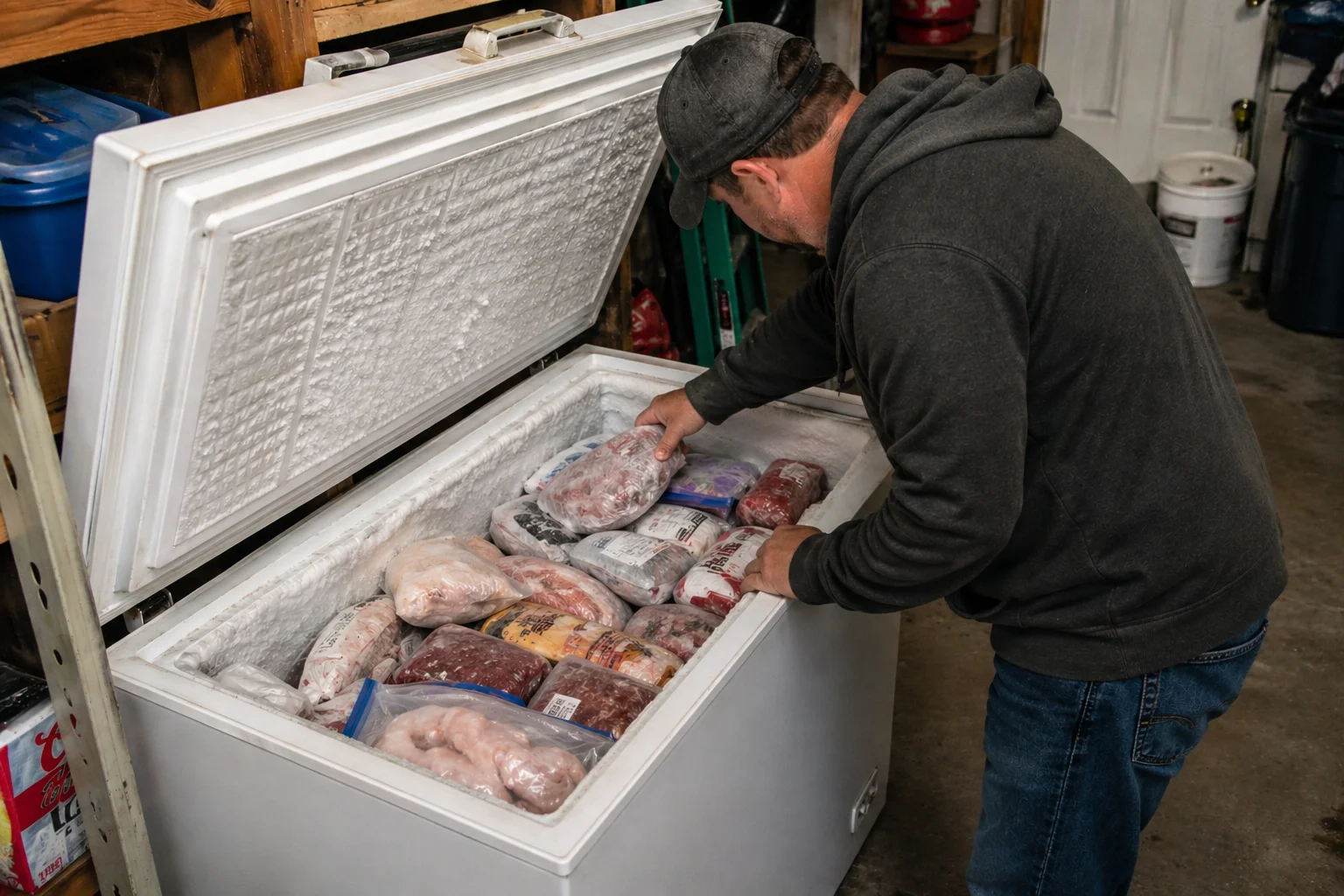
It started the way it usually does.
One afternoon, we were trying to figure out what to eat for the week. Not in some perfectly organized meal-planning kind of way. More like standing around asking, “What do you want this week?” and hoping an answer magically shows up.
Instead of opening a grocery list and starting from zero, we did something we probably should have done first anyway.
We checked the freezer.
Not just the stuff sitting on top. We actually dug through it. And once we did, we realized we had more food than we thought.
There was ground beef. Chicken breasts. Drumsticks. A couple packs of sausage. Some frozen leftovers we had forgotten about. By the time we were done looking, we had seven different things we could build dinners around.
Seven.
And we were about to go grocery shopping like we had nothing.
That is where meal planning usually goes sideways
A lot of us plan meals like every week starts with an empty kitchen. We think about what sounds good, what the kids might eat, what is quick enough for busy nights, and what we need to buy.
But we skip the part where we look at what we already paid for.
That is how food gets pushed to the back of the freezer and forgotten. It is also how grocery bills get bigger than they need to be.
Not because anybody is doing anything wrong. It is just easy to miss what is already there when life is busy and dinner has to keep happening every night.
Start with what is already there
Once we saw what we had, the week got easier to plan.
The ground beef could turn into spaghetti one night and taco bowls another. The drumsticks could be baked with a simple side. The sausage could go into a skillet meal with rice or potatoes. Nothing fancy. Nothing complicated.
We were not trying to create a perfect meal plan. We were just giving the food we already had a job.
That one little shift changed the grocery list too.
Instead of buying everything for full meals, we only had to buy the pieces that were missing. Pasta. Rice. A few vegetables. Maybe a sauce or seasoning. Stuff to fill in the gaps.
And that was the best part.
We were feeding six people, and because we had already built the week around what was in the freezer, we spent around $200 more to finish out dinners for the week.
That is still real money. Groceries are not cheap. But there is a big difference between spending money to fill in the gaps and shopping like you have to rebuild the whole week from nothing.
Try it before your next grocery list
Before you plan meals this week, open the freezer first.
Pull out what can actually become dinner. Ground beef. Chicken. Sausage. Pork chops. Frozen leftovers. Whatever you have that can be the center of a meal.
Then build from there.
You do not need to plan seven perfect dinners. Just find a few meals hiding in what you already have. Once you do that, your grocery list gets smaller and the week feels less overwhelming.
You might still need to shop. We did.
But you may not need nearly as much as you thought.
This is the kind of problem From Scratch is built for
From Scratch is not being built so people can start over every week. It is being built to help people use what they already have, turn it into real meals, and only buy what they actually need.
Because sometimes the answer to “What are we eating this week?” is already sitting in the freezer.
We’re currently in a closed beta as we build this out. If you’re interested in early access, you can head back to the main site and sign up to be notified when we open it up.