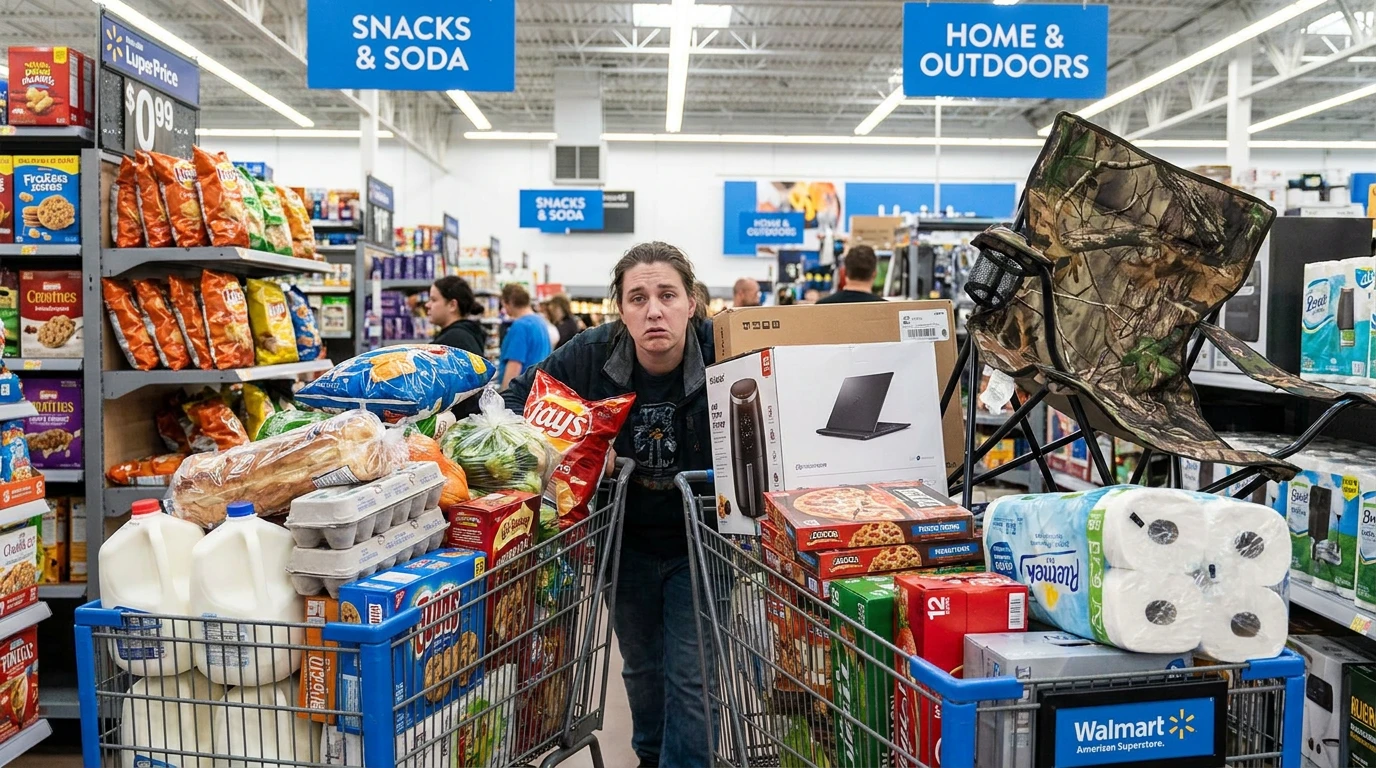
If you read last week’s post, we talked about how grocery stores are designed around behavior. The layouts, the aisle placement, the end caps, and the way you somehow walk past half the store just to grab milk, eggs, and bread.
But there’s another layer to all this that makes it even worse: going grocery shopping hungry.
Because when you’re hungry, you’re not walking into that environment thinking the same way you normally would. Your brain shifts into “feed me now” mode, and grocery stores are built to take advantage of exactly that.
That sounds dramatic, but there’s actual science behind it.
Studies have shown that hungry shoppers are more likely to make impulse purchases and buy more high-calorie, high-reward foods. Your brain starts focusing more on immediate satisfaction than long-term planning, which is probably why your grocery list suddenly becomes more of a suggestion the second you smell fresh bread or fried chicken near the entrance.
And no, that stuff is not there by accident.
The bakery smells. The hot deli food. The snack displays near checkout. The giant stacks of chips sitting at the end of aisles. That is all intentional.
Stores know the longer you stay in the building, the more likely you are to buy something you did not originally come for. And when you’re hungry, your defenses are lower. You’re more impulsive. You’re more emotional with spending. You’re looking for quick reward whether you realize it or not.
That’s also why superstores are dangerous when you shop hungry.
You walk in planning to buy hamburger meat and cereal, and twenty minutes later you’re standing there looking at patio furniture, air fryers, fishing gear, candles, and a seventy-inch TV like somehow all of this became part of the mission.
You can literally buy a gallon of milk and a laptop in the same building now. That should probably concern us more than it does.
And the crazy part is most people think they’re making rational decisions the entire time.
Research has even shown that hungry people tend to buy more overall, not just more food. Hunger increases reward-seeking behavior in general, which means you’re more likely to throw random things into the cart simply because your brain is chasing satisfaction.
You walk in for “just a few things,” and suddenly you’re leaving with frozen appetizers, cookies, extra snacks, drinks you did not need, and a receipt that makes you sit in the parking lot for a minute questioning your life choices.
And honestly, a big part of that problem is walking into the store without a plan in the first place.
Because when you’re hungry and trying to figure out dinner at the same time, your brain usually defaults to whatever sounds good in the moment instead of what actually makes sense for the week.
That’s one of the reasons we built From Scratch around meal planning.
The idea is simple: figure out meals before you ever walk into the grocery store. Because shopping gets a whole lot easier when you already know what you’re cooking, what ingredients you need, and what the week looks like ahead of time.
And for people who are busy, exhausted, or tired of trying to come up with dinner ideas every night, we’re building premium tools that can help create meal plans based on your preferences too.
The goal isn’t just to help people cook more at home. It’s to make dinner feel less stressful, grocery shopping feel more intentional, and help people stop feeling overwhelmed every time they try to figure out what to eat for the week.
We’re currently in a closed beta as we build From Scratch out. If you’re interested in early access, head back to the main site and sign up to be notified when we open it up.