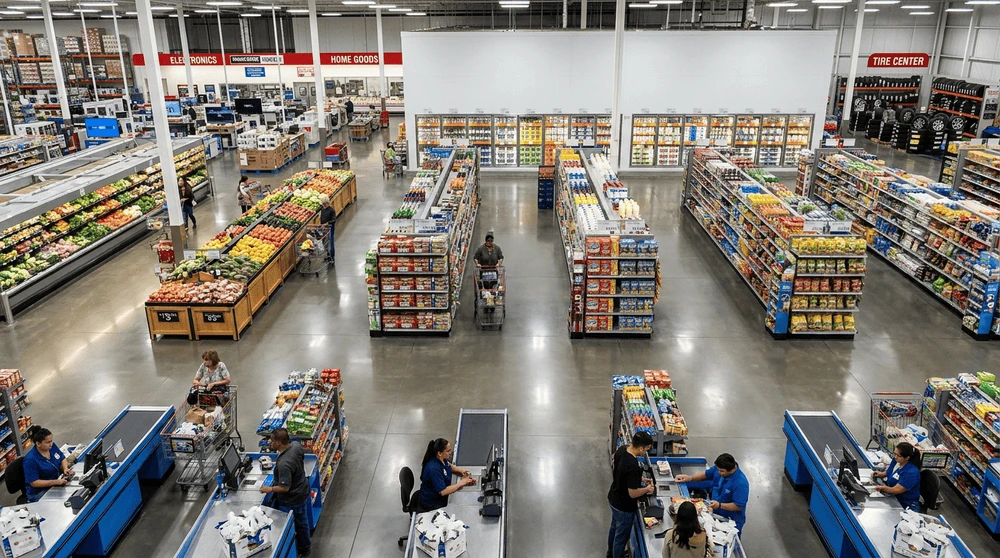
You ever notice how you can walk into a grocery store for “just a few things” and somehow leave with a cart full of stuff you never intended to buy?
And somehow the one thing you actually needed is the thing you forgot.
That’s not random.
Grocery stores are carefully designed around behavior. From the layout of the aisles to where products are placed on shelves, there’s a reason shopping feels the way it does.
Most stores put essentials like milk, eggs, and bread toward the back. That means you walk past dozens of displays, sale signs, snacks, drinks, and impulse items before you ever get to the things you came for.
Then there’s the music, the lighting, the oversized carts, and the way products are arranged at eye level. The easier something is to see or grab, the more likely people are to throw it into the cart without thinking much about it.
And superstores take that idea even further.
You can walk in planning to buy groceries and somehow end up looking at televisions, patio furniture, hunting gear, laptops, candles, or kitchen gadgets before you leave. Somewhere along the way, grocery shopping stopped being just grocery shopping.
Now it’s an experience.
Then there are the aisle-end displays. Those big stacks of products sitting at the ends of aisles are there because they’re some of the highest-traffic spots in the store. Sometimes they’re genuinely good deals. Sometimes they’re just highly visible.
Once you start noticing these patterns, you really can’t unsee them anymore.
You realize grocery shopping isn’t just about buying food. It’s about habits, routines, convenience, impulse, and store design all working together at the same time.
And honestly, that’s one reason meal planning helps more than people think.
Not because it magically fixes grocery prices or turns shopping into a perfect experience. But because walking into a store with a plan changes how you move through it. You stop wandering as much. You stop trying to decide dinner while standing in front of a freezer door. You buy with more intention instead of reacting to whatever happens to catch your eye.
The interesting part is that once you start noticing how grocery stores are designed, your shopping habits start changing too. You become more aware of the displays, the layouts, and all the little things competing for your attention while you shop.
And that’s really the point.
Meal planning doesn’t just help organize dinners for the week. It helps people shop with purpose instead of impulse.
Because when you walk into a grocery store already knowing what you need, you’re a lot less likely to walk back to the car wondering:
“How did I spend that much?”
We’re currently in a closed beta as we build From Scratch out. If you’re interested in early access, head back to the main site and sign up to be notified when we open it up.